
Ir para o conteúdo
  • Plataforma Virtual IAB Class
  • Mentorias
  • Paciente Modelo
  • Pesquisa
    • Artigos Científicos
    • GPIAB
    • Voluntários de Pesquisa Clínica
    • Projetos de Pesquisa
  • Blog
  • Plataforma Virtual IAB Class
  • Mentorias
  • Paciente Modelo
  • Pesquisa
    • Artigos Científicos
    • GPIAB
    • Voluntários de Pesquisa Clínica
    • Projetos de Pesquisa
  • Blog
  • Clinic
  • Institute
  • Dr. Antony
  • Procedimentos
  • Resultados Clínicos
  • Contato
  • Clinic
  • Institute
  • Dr. Antony
  • Procedimentos
  • Resultados Clínicos
  • Contato
  • Clinic
  • Institute
  • Dr. Antony
  • Procedimentos
  • Resultados Clínicos
  • Contato
  • Plataforma Virtual IAB Class
  • Mentorias
  • Paciente Modelo
  • Pesquisa
    • Artigos Científicos
    • GPIAB
    • Voluntários de Pesquisa Clínica
    • Projetos de Pesquisa
  • Blog
    • Ácido Hialurônico
    • Toxina Botulínica
  • Clinic
  • Institute
  • Dr. Antony
  • Procedimentos
  • Resultados Clínicos
  • Contato
  • Plataforma Virtual IAB Class
  • Mentorias
  • Paciente Modelo
  • Pesquisa
    • Artigos Científicos
    • GPIAB
    • Voluntários de Pesquisa Clínica
    • Projetos de Pesquisa
  • Blog
    • Ácido Hialurônico
    • Toxina Botulínica
Agende uma consulta

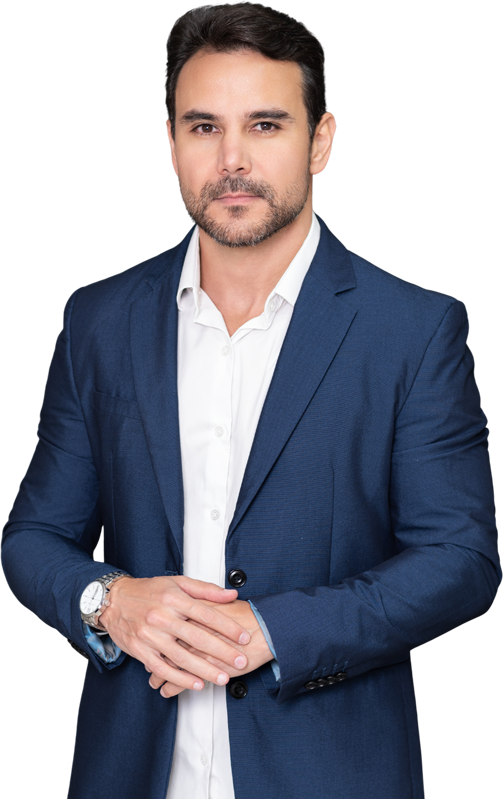
Dr. Antony Barbosa

CRF/MG 41.352 │ CRF/SP 109.943-S | CRF/PR 45.067 | RQE 20579-64

Dr. Antony Barbosa, farmacêutico, químico e biomédico com notável atuação nas áreas de Análises Clínicas e Indústria Farmacêutica, é o idealizador e fundador do Antony Barbosa Institute (ABI), reconhecido como referência em tratamentos estéticos avançados.

Com pós-graduação em Farmácia Estética, Especialização em Cosmetologia e Farmácia Clínica Dr. Antony Barbosa possui um currículo acadêmico robusto, que inclui mestrado (MSc) e doutorado (PhD) pela UFRJ, além de pós-doutorado (Posdoc) em Ciências Farmacêuticas pela UFMG, no Programa de Pós-graduação em Ciências Farmacêuticas.

Atualmente, é professor em cursos de graduação e pós-graduação na PUC Minas, atua como Speaker Galderma, Ilikia e Biometil além de atuar como consultor farmacêutico e perito judicial. Sua ampla expertise abrange Harmonização Facial, Corporal e de Alta Performance, com destaque para a inovação e o rigor científico aplicados aos procedimentos estéticos.

Dr. Antony Barbosa também atua como palestrante, revisor de periódicos científicos de alcance nacional e internacional, e ministrante de cursos nas áreas de estética, farmacologia e fitoterapia — consolidando-se como uma referência de excelência no setor.

Link do CV na Plataforma Lattes:
http://lattes.cnpq.br/7944420897591575

Link do CV na Plataforma ORCID:
https://orcid.org/0000-0003-2160-3989

Instagram Linkedin

Quer ser um profissional diferenciado no mercado da estética?

Se você é profissional da área e busca aperfeiçoar suas técnicas ou se você é um aluno avançado em procedimentos estéticos e busca a excelência no atendimento aos seus pacientes, você pode acompanhar o atendimento no dia a dia no Instituto Antony Barbosa e trocar experiências que vão enriquecer sua performance.

Vamos juntos buscar sempre o melhor para nossos pacientes, trocando informações teóricas e práticas embasados na ciência e em técnicas inovadoras.

Seja um profissional diferenciado no mercado da estética. Eu posso ajudar a você através das mentorias presencial e/ou on line.

Saiba Mais

Artigos Científicos

Loading...
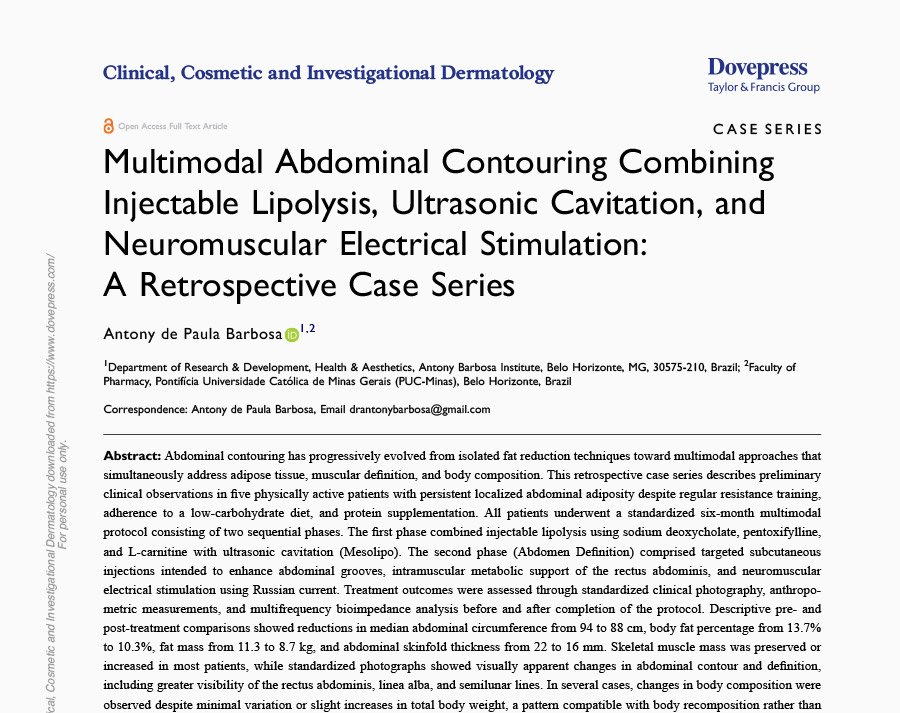
Multimodal Abdominal Contouring Combining Injectable Lipolysis, Ultrasonic Cavitation, and Neuromuscular Electrical Stimulation: A Retrospective Case Series
Multimodal Abdominal Contouring Combining Injectable Lipolysis, Ultrasonic Cavitation, and Neuromuscular Electrical Stimulation: A Retrospective Case Series 
  • 9, setembro 2026
Abdominal contouring has progressively evolved from isolated fat reduction techniques toward multimodal approaches that simultaneously address adipose tissue, muscular definition, and body composition. This retrospective case series describes preliminary clinical observations in five physically active patients with persistent localized abdominal adiposity despite regular resistance training, adherence to a low-carbohydrate diet, and protein supplementation. All patients underwent a standardized six-month multimodal protocol consisting of two sequential phases. The first phase combined injectable lipolysis using sodium deoxycholate, pentoxifylline, and L-carnitine with ultrasonic cavitation (Mesolipo). The second phase (Abdomen Definition) comprised targeted subcutaneous injections intended to enhance abdominal grooves, intramuscular metabolic support of the rectus abdominis, and neuromuscular electrical stimulation using Russian current. Treatment outcomes were assessed through standardized clinical photography, anthropometric measurements, and multifrequency bioimpedance analysis before and after completion of the protocol. Descriptive pre- and post-treatment comparisons showed reductions in median abdominal circumference from 94 to 88 cm, body fat percentage from 13.7% to 10.3%, fat mass from 11.3 to 8.7 kg, and abdominal skinfold thickness from 22 to 16 mm. Skeletal muscle mass was preserved or increased in most patients, while standardized photographs showed visually apparent changes in abdominal contour and definition, including greater visibility of the rectus abdominis, linea alba, and semilunar lines. In several cases, changes in body composition were observed despite minimal variation or slight increases in total body weight, a pattern compatible with body recomposition rather than weight loss alone. Given the retrospective, uncontrolled design, the small sample size, and the simultaneous use of multiple interventions, these observations cannot establish treatment efficacy or determine the relative contribution of individual protocol components, resistance training, or nutritional habits. Nevertheless, the findings provide preliminary, descriptive, and hypothesisgenerating observations regarding the feasibility of a multimodal approach to abdominal contouring. Prospective controlled studies with larger samples are needed to evaluate efficacy and determine the contribution of individual therapeutic components.
veja o artigo>>

Factors-Associated-with-Previous-Aesthetic-Procedures-among-Men-
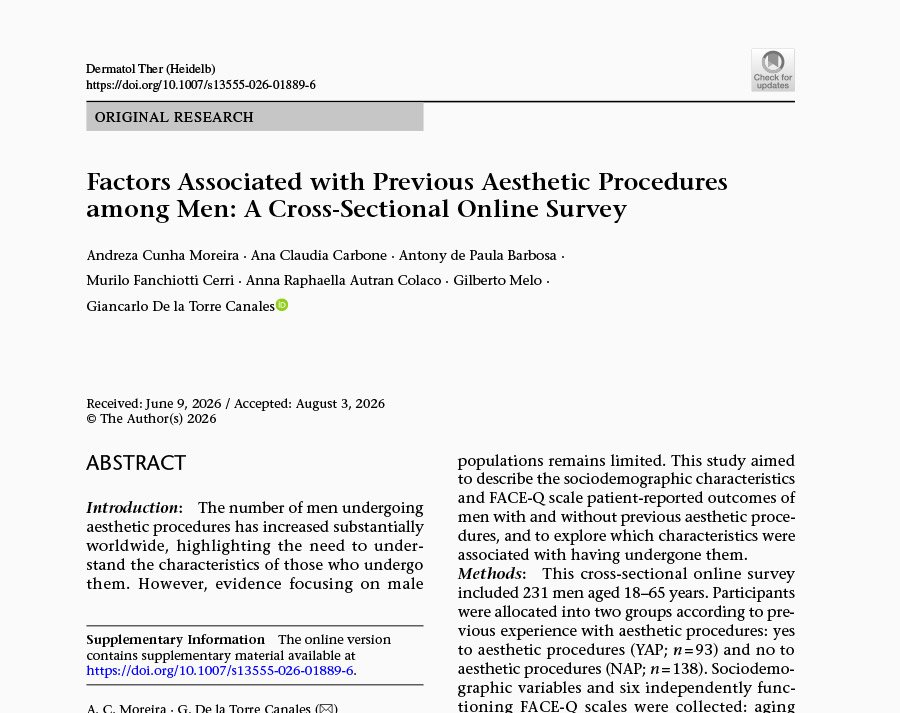
Factors Associated with Previous Aesthetic Procedures among Men: A Cross‑Sectional Online Survey
  • 3, agosto 2026
The number of men undergoing aesthetic procedures has increased substantially worldwide, highlighting the need to understand the characteristics of those who undergo them. However, evidence focusing on male populations remains limited. This study aimed to describe the sociodemographic characteristics and FACE-Q scale patient-reported outcomes of men with and without previous aesthetic procedures, and to explore which characteristics were associated with having undergone them. Methods: This cross-sectional online survey included 231 men aged 18–65 years. Participants were allocated into two groups according to previous experience with aesthetic procedures: yes to aesthetic procedures (YAP; n = 93) and no to aesthetic procedures (NAP; n = 138). Sociodemographic variables and six independently functioning FACE-Q scales were collected: aging appraisal, appearance-related psychosocial distress, satisfaction with facial appearance, psychological function, social function, and satisfaction with lower face and jawline. Univariate between-group comparisons and exploratory multivariate analyses were performed. Results: Participants in the YAP group were more frequently from Brazil, aged ≥ 31 years, and in the higher-income group (p < 0.05). They reported lower Aging Appraisal scores, (trimmed mean difference −15.8; 95% CI −21.6 to −9.9), greater appearance-related psychosocial distress (+13.1; 95% CI 6.4–19.7), and lower satisfaction with facial appearance (− 8.6), psychological function (−8.6), and satisfaction with the lower face and jawline (−11.4). Multivariate analysis showed substantial overlap between groups (R2Y = 0.292; Q2 = 0.256). In the exploratory logistic regression, Brazilian participants (OR 0.29; 95% CI 0.14–0.57), age ≥ 31 years (OR 2.35; 95% CI 1.08–5.13), and higher income (OR 2.90; 95% CI 1.27–6.61) were associated with previous aesthetic procedures, whereas no FACE-Q scale was independently associated with the outcome. Conclusions: Men undergoing previous aesthetic procedures did not demonstrate a clearly psychosocial profile compared with the general male population. However, age, country, and income, but not any FACE-Q, were independently associated with undergoing these procedures.

veja o artigo>>

1 2 … 9
Veja outros artigos

Endereços

Maringá

Av. Joaquim Duarte Moleirinho, 3223, Sala 2605
Recanto dos Magnatas – Maringá – PR

WhatsApp: (44) 99776-2057

Belo Horizonte

Rua Marco Aurélio de Miranda, 406
Sala 1104 – Buritis – MG

WhatsApp: (31) 98470-3329

São Paulo

Rua Gomes de Carvalho, 1581
Cj 803 – Vila Olímpia – SP

Responsável

Dr. Antony Barbosa
Farmacêutico | Pesquisador
CRF-MG 41352
RQE-20579-64

Siga-nos

Antony Barbosa Clinic

Instagram Facebook-f

Antony Barbosa Institute

Instagram Facebook-f Youtube
Todo o conteúdo deste site tem caráter meramente informativo e não deve ser utilizado para realizar autodiagnóstico, autotratamento ou automedicação. Em caso de dúvidas, consulte o seu médico.

2026. Todos os direitos reservados.

DW/tz